The era of unlimited AI is ending. Here’s how skilled prompting can save time, tokens, and real money.
Written by Pax Koi, creator of Plainkoi — tools and essays for clear thinking in the age of AI.
For a while, AI felt like magic on tap.
You type. It replies. You sketch an idea, and it builds with you. From brainstorming to code generation, it’s become the always-on co-pilot of our digital lives. And with a $20 flat-rate subscription? It felt endless. A buffet of intelligence with no closing time.
But here’s the thing no one really wants to say out loud: the magic isn’t free. It never was.
Behind every snappy response is a burst of electricity, rows of high-end GPUs, and a cascade of data-center computations. And someone’s been footing the bill. Until now, it wasn’t you.
That’s about to change.
The “invisible cost” of AI is becoming visible. And when it does, prompting won’t just be a skill. It’ll be a budget line.
The Flat-Rate Era Is Ending
Right now, most people experience AI through friendly, predictable subscriptions. ChatGPT Plus, Claude Pro, Gemini Advanced—pay a monthly fee, and the machine listens as much as you want.
But look deeper, and you’ll find cracks forming in that model. Because the smarter the model, the more expensive it is to run. Every word from GPT-4o costs real money. Every back-and-forth takes compute, memory, and time.
The result? Power users—those who rely heavily on AI every day—are unintentionally sinking the flat-rate ship. When one user generates ten times more load than another, but pays the same? That doesn’t scale. Not for long.
The fix? Meter it. Token-based billing. Pay for what you use.
It’s not a possibility. It’s a slow tide rising—and you’re already ankle-deep.
How the Shift Is Rolling Out (Quietly)
You may not have noticed, but the transition has already begun:
- Hybrid plans are appearing.
Think of Adobe’s AI features: you get some free usage, then hit a wall. Want more? Buy credits. Other platforms are following suit—offering a bundle of “included tokens,” with top-ups available once you exceed your allotment. - Free tools aren’t so free.
Daily caps. Usage limits. Quiet nudges to upgrade. Behind every “limit reached” alert is a token threshold the provider’s trying not to talk about. - Custom GPTs and AI agents are being monetized.
As GPT Store-type platforms evolve, expect usage-based pricing for specialized agents. You won’t pay to access them—you’ll pay each time they work. - Transparency is on the horizon.
Soon, you’ll see dashboards telling you exactly how many tokens you’ve used:
“That query cost 324 tokens.”
“You’ve used 56,000 tokens this month.”
It’ll look a lot like your phone data plan—and feel just as real.
All of this points in one direction: AI is becoming a metered utility.
Tokens Are the New Kilowatt-Hours
Let’s talk about that metaphor everyone’s starting to use—because it’s not just clever. It’s accurate.
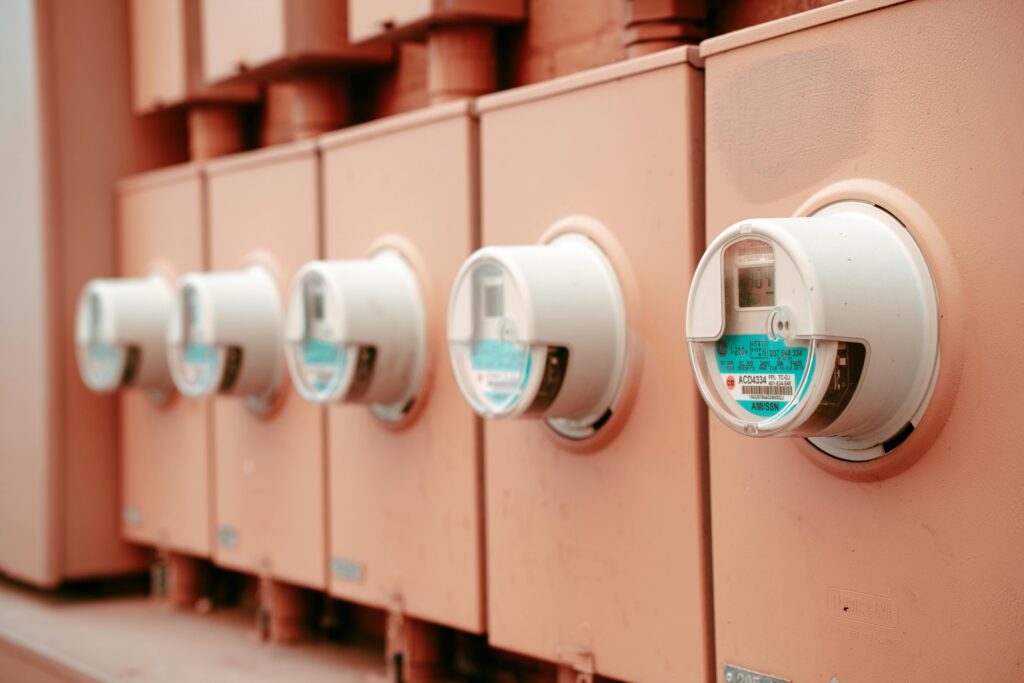
Tokens are to AI what kilowatt-hours (KWh) are to electricity. You don’t pay for owning a light switch. You pay for turning it on. Same with AI: you’re not paying for access—you’re paying for activity.
- Small prompts are lightbulbs.
Quick questions, tiny models, short answers? Minimal cost. - Complex queries are dryers and ovens.
Want nuanced reasoning, custom tone, and a full code block from GPT-4o? That’s high wattage. - Your prompt is your energy draw.
And your efficiency determines how long your credits last.
This isn’t abstract anymore. You’ll soon be budgeting tokens like you budget energy. Asking yourself, “Do I really need the fancy model for this?” will become normal.
Different Models, Different Costs
Just like some appliances use more power, some AI models burn more tokens.
- GPT-3.5 or Claude Instant? Lower cost, faster response.
- GPT-4, GPT-4o, Claude Opus? More power, more tokens, higher price tag.
Smart users will learn to match the model to the job. Want a listicle or bullet points? Use the lightweight tool. Need emotional nuance, structured reasoning, or multi-step logic? Bring in the big bot—but make it count.
And don’t be surprised if token pricing becomes dynamic. Off-peak discounts. High-demand surcharges. It’s already happening in energy. It may happen here too.
Prompting Is No Longer Optional Literacy
If you’ve been playing with prompt engineering out of curiosity, here’s your reward: it’s about to become a cost-saving skill.
Clean prompting isn’t just elegant—it’s economical.
- Every extra word burns tokens.
Over-explain, ramble, or waffle, and you’re paying for the detour. - Re-prompting costs more than clarity.
If you get it wrong the first time, the second, third, and fourth attempts each add to the tab. - Bad input is expensive confusion.
The AI will try to help—but it’ll burn through resources while doing it. You pay for the mess and the fix.
This is where prompting becomes meta-literacy:
Not just talking to a machine, but communicating with precision, purpose, and control.
Every Token Counts (and So Will Every Prompt)
Here’s where the mindset shifts:
Prompting isn’t just about “what gets the best response.”
It’s about “what gets the right response, the fastest, with the least waste.”
That means:
- Knowing when to be verbose, and when to be sharp.
- Choosing the right model for the task.
- Framing your ask clearly from the start.
- Avoiding rabbit holes of vague instructions and confused replies.
Prompting is strategy now. A way to stretch your tokens further. And soon, your budget too.
This Isn’t the End of Free. It’s the Start of Conscious
Yes, there’s a bit of mourning here. We’ve gotten used to AI as this wide-open, consequence-free zone. A place to play, ponder, and prod.
But maybe this shift isn’t just about money.
Maybe it’s an invitation to be more present with how we use this power.
Because here’s the upside:
When every token counts, you start paying attention to what you really want to ask. You take the extra beat to think. To frame. To mean it.
And that kind of clarity? It pays off—financially and otherwise.
You’re Already Ahead
If you’ve made it this far, here’s the good news: you’re already thinking ahead of the curve. You’re not just reacting to the changes. You’re preparing for them.
Every prompt you’ve tuned. Every misfire you’ve learned from. Every experiment in tone or structure? That’s training. That’s future-proofing. That’s quiet currency.
And when the meters go public—when everyone else suddenly realizes AI costs real money—you’ll already know how to make it count.
Final Thought: The Age of Metered Intelligence Has a Secret Gift
This transition might seem like a constraint. But it’s also a filter. A way to cut through the noise, focus the signal, and build something better.
Because if we treat each prompt not as a throwaway, but as an investment?
We might just become better thinkers. Sharper communicators. More deliberate creators.
And that’s a pretty powerful return on a few tokens.
Further Reading
- How much energy does ChatGPT use? https://epoch.ai/gradient-updates/how-much-energy-does-chatgpt-use
Written by Pax Koi, creator of Plainkoi — Tools and essays for clear thinking in the age of AI — with a little help from the mirror itself.
AI Disclosure: This article was co-developed with the assistance of ChatGPT (OpenAI) and Gemini (Google DeepMind), and finalized by Plainkoi.
© 2025 Plainkoi. Words by Pax Koi.
https://CoherePath.org
