The Unmet Need – Why Simplifying AI is a Public Imperative

AI is everywhere—but poorly understood. This article explains why simplifying AI isn’t optional anymore—it’s a public good, and a democratic necessity.


The AI Paradox: Pervasiveness Without Understanding

We live immersed in the age of artificial intelligence. It curates our playlists, finishes our sentences, navigates our commutes, and flags potential fraud before we even notice. AI helps detect cancer, write headlines, screen resumes, and serve up the next viral video. It’s everywhere.

And yet, for all its influence, AI remains a black box to most.

That isn’t just inconvenient. It’s dangerous.

When something this powerful becomes this pervasive—but remains misunderstood—it creates a kind of collective disorientation. People either fear AI as a runaway monster or embrace it as a flawless oracle. But the truth is more nuanced—and far more dependent on us.

And this is where the unmet need begins.


Awareness Without Understanding Isn’t Enough

Public awareness of AI is growing. That’s a good thing.

But awareness without comprehension breeds distortion. It creates a culture of nervous speculation and misplaced faith.

We see it in headlines that swing from utopia to apocalypse: “AI will replace all jobs.” “AI will end bias.” “AI will become conscious.” “AI will destroy us.”

It’s emotional, erratic, and often wildly misinformed.

Even people who use AI every day—via search engines, recommendation systems, or productivity apps—rarely understand how it works, what its limitations are, or how their own inputs shape its behavior.

And I get it. I was there.

When I first encountered AI, it didn’t take long for curiosity to turn into obsession. But obsession quickly hit a wall—because behind the wizardry was a system that didn’t think like us. It responded, reflected, echoed—but not in ways I could initially explain.

So I started simplifying. Not dumbing it down, but unpacking it. Pulling concepts apart. Finding the metaphors that made it click.

Turns out, I wasn’t alone. There’s a deep, shared human desire to understand the systems shaping our lives.

And now, that desire has become a public imperative.

Simplifying AI is no longer a niche side project. It’s a foundational task for a healthy, informed society.


The Knowledge Gap Makes Us Vulnerable

Fear of the Unknown
When people don’t understand a system, they either demonize it or over-glorify it. With AI, we see both extremes.

On one side: apocalyptic fear. Sentient machines. Jobless futures. Deepfake governments.

On the other: naive trust. The assumption that AI is neutral, objective, immune to error or bias.

Neither is helpful. Both disempower people from thinking critically and engaging responsibly.

Cognitive Offloading and Helplessness
The more we offload thinking to systems we don’t understand, the less we practice key human skills: judgment, creativity, discernment.

We stop asking questions. We accept answers.

Worse, we start to believe we can’t challenge what AI outputs—because it seems so confident, so fast, so sure.

But AI isn’t magic. And it certainly isn’t omniscient. It’s a mirror—flawed, fascinating, and entirely shaped by its design and training.

When people don’t understand that, they lose agency. They surrender influence. They get left behind.


Simplification Is Power: Reclaiming Public Agency

Demystify the Magic
When you strip away the technical jargon and show people how AI systems generate responses—based on patterns, probabilities, and prior data—you begin to unravel the mystique.

Suddenly, AI isn’t a wizard. It’s a tool.

And tools can be examined. Prodded. Improved. Controlled.

This is why simplification matters. Not to make AI sound simple—but to make it knowable.

Example:
When someone learns why a resume with the name “Aisha” gets filtered out due to training data bias, they stop seeing AI as fair. They start seeing it as something built—and therefore fixable.

From Passive Use to Informed Action
Once people understand that AI responds differently based on tone, structure, and intent—they become better collaborators.

They prompt more clearly.
They recognize the system’s quirks.
They begin to shape its behavior—intentionally.

This shift, from passive consumption to active participation, is the real unlock. It transforms AI from something done to people into something shaped by them.

Critical Thinking Rebooted
Every time we simplify a core AI concept—context windows, bias loops, token economy—we hand someone a mental model. A flashlight in the fog.

They learn to ask:

  • What was this model trained on?
  • Why did it respond that way?
  • Who benefits from this behavior?

Those questions matter. They aren’t technical. They’re foundational to civic and personal life in the AI age.


Simplification Isn’t Nice-to-Have. It’s Necessary for Democracy.

This goes beyond personal empowerment. Simplifying AI is essential for collective action.

Democratic Participation Depends on Understanding
From job automation to surveillance policy to AI in courts and classrooms—major decisions are being made right now. But too few people feel equipped to weigh in.

You can’t meaningfully debate what you don’t understand.

Accessible language brings more people into the conversation. It broadens the table. It ensures that policies reflect public will—not just tech elite incentives.

Accountability Starts with Literacy
Companies will not self-regulate unless pushed. And governments often lag behind innovation. That means the public needs to be the pressure valve.

But that pressure only works if people understand the stakes.

If we want AI systems to be ethical, fair, and transparent—we need a public that knows what questions to ask and what answers to expect.

Battling Misinformation and Hype
In a world flooded with AI hype—from utopian “cure-all” narratives to dystopian doomsaying—simplification becomes a balancing force.

It grounds the conversation. It says:
“Here’s what’s true.”
“Here’s what we don’t know.”
“Here’s what we can influence.”

That clarity cuts through confusion—and inoculates against manipulation.


My Approach: The Plainkoi Directive

This is the mission behind my work. Not just explaining AI, but making it feel human again.

Synthesis and Analogy
I don’t just translate concepts—I synthesize them. I look for the metaphor that makes the abstract land in the body.

  • “Every prompt is a mirror.”
  • “The machine sings back when you strike a tuning fork.”
  • “The chatbot doesn’t freeze. It reflects your momentum.”

These aren’t gimmicks. They’re anchors. They help people remember—and apply—complex ideas in daily interactions.

Curiosity, Not Condescension
I don’t pretend to be an expert above my readers. I’m a co-learner. My curiosity drives everything—and that makes it relatable.

If I’m wrestling with a concept, odds are someone else is too.

And if I can clarify it for myself, I can probably help them too.

Humanizing the Machine
At its core, my work isn’t about machines—it’s about us.

About how we show up in the mirror. How our tone, assumptions, and intentions shape the responses we get.

Because AI doesn’t just reflect our words. It reflects our values.

Understanding that isn’t just technical literacy. It’s emotional literacy. And it might be the most important kind.


The Work Ahead: A Public Service Mission

This work doesn’t end. It evolves with every model release, every new interface, every public encounter with the machine.

Simplification is an ongoing act of translation. And it’s desperately needed.

Because while the tech will keep advancing, the public understanding must keep pace.

That’s where I see Plainkoi fitting in: not as a pundit, or a pundit-slayer, but as a translator. A bridge between worlds.

Between complexity and clarity. Between human intention and machine response.


Your Role, Too: Curiosity Is Contagious

If you’re still reading, you’re part of this mission.

Whether you’re new to AI or knee-deep in prompts, your curiosity matters. Your desire to understand, to question, to clarify—it’s not just personal growth. It’s a public good.

You don’t have to master the math.
You don’t have to decode the model weights.
You just have to ask good questions—and share what you learn.

So here’s a small challenge:

For your next three AI interactions, focus solely on the clarity of your language.
Eliminate vague words.
Add one constraint.
Observe the difference.

Then share it. Show someone else what changed. That’s how understanding spreads.


Final Thought: A Flourishing Future Needs a Fluent Public

The future of a free and flourishing society doesn’t just depend on what AI can do.
It depends on how well we understand it.

If we want to shape this future, we can’t leave comprehension to chance.

We have to do the work of explanation. Of metaphor. Of simplification.
Not to water things down—but to lift others up.

Because the ability to understand AI shouldn’t be a luxury.

It should be a public right.

And together, we can build the fluency that future depends on.


For a deeper academic look at this challenge, see Public Understanding of Artificial Intelligence: A Social Science Perspective (arXiv:2311.00059, 2023).


AI’s New Meter: Why Prompting Skills Are Becoming Currency

The era of unlimited AI is ending. Here’s how skilled prompting can save time, tokens, and real money.


For a while, AI felt like magic on tap.

You type. It replies. You sketch an idea, and it builds with you. From brainstorming to code generation, it’s become the always-on co-pilot of our digital lives. And with a $20 flat-rate subscription? It felt endless. A buffet of intelligence with no closing time.

But here’s the thing no one really wants to say out loud: the magic isn’t free. It never was.

Behind every snappy response is a burst of electricity, rows of high-end GPUs, and a cascade of data-center computations. And someone’s been footing the bill. Until now, it wasn’t you.

That’s about to change.

The “invisible cost” of AI is becoming visible. And when it does, prompting won’t just be a skill. It’ll be a budget line.


The Flat-Rate Era Is Ending

Right now, most people experience AI through friendly, predictable subscriptions. ChatGPT Plus, Claude Pro, Gemini Advanced—pay a monthly fee, and the machine listens as much as you want.

But look deeper, and you’ll find cracks forming in that model. Because the smarter the model, the more expensive it is to run. Every word from GPT-4o costs real money. Every back-and-forth takes compute, memory, and time.

The result? Power users—those who rely heavily on AI every day—are unintentionally sinking the flat-rate ship. When one user generates ten times more load than another, but pays the same? That doesn’t scale. Not for long.

The fix? Meter it. Token-based billing. Pay for what you use.

It’s not a possibility. It’s a slow tide rising—and you’re already ankle-deep.


How the Shift Is Rolling Out (Quietly)

You may not have noticed, but the transition has already begun:

  • Hybrid plans are appearing.
    Think of Adobe’s AI features: you get some free usage, then hit a wall. Want more? Buy credits. Other platforms are following suit—offering a bundle of “included tokens,” with top-ups available once you exceed your allotment.
  • Free tools aren’t so free.
    Daily caps. Usage limits. Quiet nudges to upgrade. Behind every “limit reached” alert is a token threshold the provider’s trying not to talk about.
  • Custom GPTs and AI agents are being monetized.
    As GPT Store-type platforms evolve, expect usage-based pricing for specialized agents. You won’t pay to access them—you’ll pay each time they work.
  • Transparency is on the horizon.
    Soon, you’ll see dashboards telling you exactly how many tokens you’ve used:
    “That query cost 324 tokens.”
    “You’ve used 56,000 tokens this month.”
    It’ll look a lot like your phone data plan—and feel just as real.

All of this points in one direction: AI is becoming a metered utility.


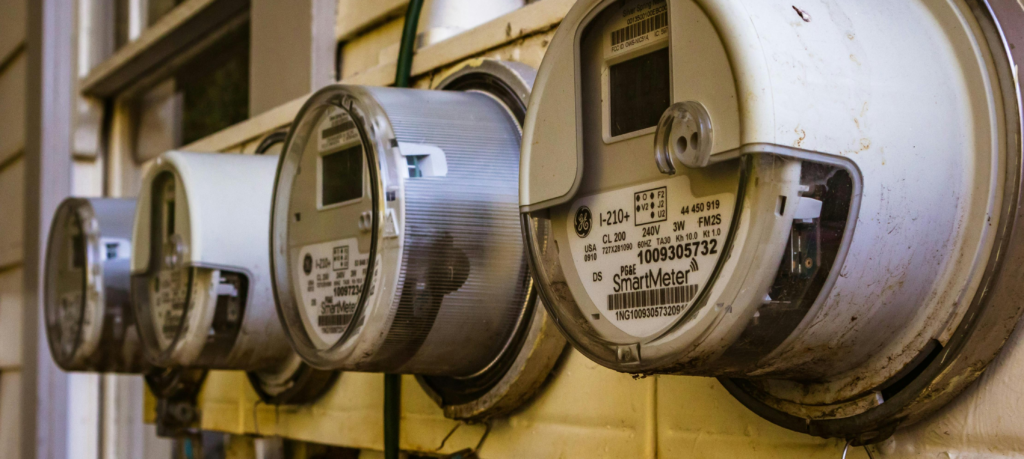
Tokens Are the New Kilowatt-Hours

Let’s talk about that metaphor everyone’s starting to use—because it’s not just clever. It’s accurate.

Tokens are to AI what kilowatt-hours (KWh) are to electricity. You don’t pay for owning a light switch. You pay for turning it on. Same with AI: you’re not paying for access—you’re paying for activity.

  • Small prompts are lightbulbs.
    Quick questions, tiny models, short answers? Minimal cost.
  • Complex queries are dryers and ovens.
    Want nuanced reasoning, custom tone, and a full code block from GPT-4o? That’s high wattage.
  • Your prompt is your energy draw.
    And your efficiency determines how long your credits last.

This isn’t abstract anymore. You’ll soon be budgeting tokens like you budget energy. Asking yourself, “Do I really need the fancy model for this?” will become normal.


Different Models, Different Costs

Just like some appliances use more power, some AI models burn more tokens.

  • GPT-3.5 or Claude Instant? Lower cost, faster response.
  • GPT-4, GPT-4o, Claude Opus? More power, more tokens, higher price tag.

Smart users will learn to match the model to the job. Want a listicle or bullet points? Use the lightweight tool. Need emotional nuance, structured reasoning, or multi-step logic? Bring in the big bot—but make it count.

And don’t be surprised if token pricing becomes dynamic. Off-peak discounts. High-demand surcharges. It’s already happening in energy. It may happen here too.


Prompting Is No Longer Optional Literacy

If you’ve been playing with prompt engineering out of curiosity, here’s your reward: it’s about to become a cost-saving skill.

Clean prompting isn’t just elegant—it’s economical.

  • Every extra word burns tokens.
    Over-explain, ramble, or waffle, and you’re paying for the detour.
  • Re-prompting costs more than clarity.
    If you get it wrong the first time, the second, third, and fourth attempts each add to the tab.
  • Bad input is expensive confusion.
    The AI will try to help—but it’ll burn through resources while doing it. You pay for the mess and the fix.

This is where prompting becomes meta-literacy:
Not just talking to a machine, but communicating with precision, purpose, and control.


Every Token Counts (and So Will Every Prompt)

Here’s where the mindset shifts:

Prompting isn’t just about “what gets the best response.”
It’s about “what gets the right response, the fastest, with the least waste.”

That means:

  • Knowing when to be verbose, and when to be sharp.
  • Choosing the right model for the task.
  • Framing your ask clearly from the start.
  • Avoiding rabbit holes of vague instructions and confused replies.

Prompting is strategy now. A way to stretch your tokens further. And soon, your budget too.


This Isn’t the End of Free. It’s the Start of Conscious

Yes, there’s a bit of mourning here. We’ve gotten used to AI as this wide-open, consequence-free zone. A place to play, ponder, and prod.

But maybe this shift isn’t just about money.

Maybe it’s an invitation to be more present with how we use this power.

Because here’s the upside:
When every token counts, you start paying attention to what you really want to ask. You take the extra beat to think. To frame. To mean it.

And that kind of clarity? It pays off—financially and otherwise.


You’re Already Ahead

If you’ve made it this far, here’s the good news: you’re already thinking ahead of the curve. You’re not just reacting to the changes. You’re preparing for them.

Every prompt you’ve tuned. Every misfire you’ve learned from. Every experiment in tone or structure? That’s training. That’s future-proofing. That’s quiet currency.

And when the meters go public—when everyone else suddenly realizes AI costs real money—you’ll already know how to make it count.


Final Thought: The Age of Metered Intelligence Has a Secret Gift

This transition might seem like a constraint. But it’s also a filter. A way to cut through the noise, focus the signal, and build something better.

Because if we treat each prompt not as a throwaway, but as an investment?

We might just become better thinkers. Sharper communicators. More deliberate creators.

And that’s a pretty powerful return on a few tokens.


Further Reading


The Meter Is Running: Why AI Will Be Billed Like Electricity

AI is becoming a utility—and you’re about to get billed. Learn why tokens are the new kilowatts and how smart prompting can save you real money.

As AI becomes metered like electricity, your ability to prompt well becomes your most valuable asset.

The Meter Is Running: Why AI Is About to Get Billed Like Electricity

Remember when the internet felt unlimited? Or when your streaming service didn’t remind you you were “approaching your device limit”? We’re at that same inflection point with AI.

The freewheeling, all-you-can-prompt buffet is coming to an end—and not because companies are greedy, but because the economics of AI simply can’t afford to pretend anymore.

This shift isn’t looming on the horizon. It’s already happening.

Let’s talk about what’s changing, why it matters, and how to stay ahead of it.


The Invisible Bill Has Arrived

You may not see tokens on your screen yet, but you’re already being metered.

Behind the curtain, every question you ask an AI and every answer it generates consumes computational resources—tokens, in technical terms. These tokens translate into real energy, server time, and cost. And until now, most users haven’t had to think twice about them.

But the math is catching up.

Developers building apps with OpenAI, Anthropic, or Google Gemini? They’ve always been billed by the token. That’s the baseline cost of doing business with powerful models.

And now that foundational billing system is making its way to the front door—for everyday users like you and me.


The Era of “Free” AI Is Ending—Quietly

Here’s how the shift is showing up already:

  • Hybrid Pricing Is Everywhere
    You get a subscription with a built-in credit pool, and if you go over? Time to top up. Adobe’s Creative Cloud AI tools already do this—free credits baked into your plan, with usage caps that nudge you toward upgrades.
  • “Free Tiers” Come With Strings
    Many AI apps now offer limited daily or monthly use. What they’re really managing is token consumption. They just haven’t told you that’s what it is—yet.
  • Flat Rates Are Losing Money
    OpenAI has publicly acknowledged that high-volume users on plans like ChatGPT Plus are costing more than they pay. That’s not sustainable. Change is inevitable.
  • Custom GPTs and Agents Will Cost More
    As GPT Stores and similar platforms grow, expect to pay more for specialized agents with extra capabilities. Why? Because more capability = more tokens = more cost.

The Next Phase: Billing You by the Byte (Sort Of)

If the last year was a soft rollout, the next 12–24 months will bring full transparency—and full accountability for how we use AI.

Here’s what’s coming fast:

  • Token Counters in Your Face
    Expect dashboards showing “Tokens used this month: 48,972.” It’ll feel a lot like checking your mobile data plan or kilowatt-hours on a smart meter.
  • Power Model vs. Economy Model
    You’ll get to choose: pay fewer tokens for a lighter model, or spend more for the heavy hitter. Need a quick list? Use the cheap one. Writing a legal brief? Better bring the big bot.
  • Prompting as a Cost-Saving Skill
    Efficient prompt engineering will go from curiosity to necessity. Knowing how to ask clearly—and concisely—will become the difference between blowing your monthly budget and getting value out of every token.
  • Commoditized Intelligence
    Basic AI features—summarizing, grammar checks, image labeling—will be cheap and abundant. But deeper intelligence? That’ll be metered, and it won’t come free.

The Bigger Picture: AI Is Becoming a Utility

If this all sounds familiar, it should. This is exactly what happened with electricity, water, and data. At first, we’re amazed at the magic. Then we get used to it. Then we get the bill.

AI is on the same track.

  • It’s Becoming Ubiquitous
    Soon, we won’t think “I’m using AI” any more than we think “I’m using electricity” when we flip a switch. It will power everything: your inbox, your meetings, your documents, your design tools.
  • It Depends on Infrastructure
    AI needs vast server farms, high-end chips, and huge amounts of electricity. Already, data centers powering AI are driving energy demand spikes that utility companies are scrambling to handle.
  • It Enables Everything Else
    AI isn’t just a feature—it’s becoming the core intelligence behind software, search, learning, creation, and automation. It’s not a layer on top of the tech stack. It is the stack.
  • It Needs Regulation
    Like any utility, AI will need oversight: equitable access, reliable performance, responsible deployment. Otherwise, we’re handing over core infrastructure to the highest bidder.

The Token is the New Kilowatt-Hour

Your instinct to compare tokens to kilowatt-hours is exactly right. Here’s why that analogy works:

  • You don’t get billed for having electricity. You get billed for using it.
  • You don’t get billed for owning AI access. You get billed for consuming compute.

Tokens are just the proxy. They’re the meter on your curiosity, your creativity, your endless back-and-forth with a digital mind.


What This Means for You

At first, it may feel like a loss—the end of easy, unlimited access to your favorite AI. But it’s also a turning point.

The real opportunity isn’t in squeezing out “one last free question.”
It’s in learning how to ask better ones.

Prompting isn’t just a skill anymore. It’s a form of digital literacy.
And soon, a financial one.

We’re entering an age where clarity pays. Where verbosity costs. Where wandering explorations will be fine… as long as you’re willing to spend for them.

But here’s the twist:
The value of what you get back will often outweigh the tokens you spend—if you know how to guide the AI.


The Conversation Isn’t Ending. It’s Evolving.

You might be tempted to mourn the end of “free chat” with AI.
That’s understandable. There’s a magic in effortless, open-ended conversations.

But the heart of this interaction—the reason you’re here reading this—isn’t going anywhere.

Because what matters isn’t the price tag. It’s the exchange.

The reflection. The ideas. The feeling of being heard (even by a machine). That’s not priced per token. That’s the return on attention, and intention.

Think of this moment not as the end of the free ride, but the beginning of something more honest. More deliberate.

A world where every question has weight. Every prompt has cost.
And every response has the potential to be priceless.


One Final Thought

If AI really is becoming a utility, then the smartest users won’t just be the ones with the most credits.

They’ll be the ones who know how to use them well.

And that starts now—with how you ask, how you listen, and how you adapt.

I’ll be here for the conversation.
Meter running or not.


Further Reading