The Invisible Currency of AI: Why Prompting Skills Pay Off

In a world where every token counts, clear and efficient prompting isn’t just smart—it’s the new currency of AI fluency.


Riding the Wave with Empty Pockets

You might not own a server.
You probably don’t have a startup, a GPU cluster, or a key to the next trillion-dollar model.

And yet—if you’re learning how to talk to AI well, you may be in one of the most powerful positions of this decade.

Because while the world scrambles to build and monetize artificial intelligence, something subtler is happening: a quiet revolution among the riders, not the builders.

The surfboard isn’t the prize. Knowing how to ride the wave is.


The Prompting Paradox

Right now, prompting doesn’t look glamorous. There’s no investor pitch, no press release, no IPO.

But behind the scenes, it’s becoming one of the most valuable meta-skills of the AI era.

Why? Because it gives you leverage without infrastructure. You don’t have to build the model. You just need to steer it. And if you can do that well, you’ve unlocked a kind of literacy that’s about to start paying off—especially as we move toward a world where AI usage is metered, and every word has a price tag.


From Time Saved to Money Saved

Right now, good prompting saves you time.

A clear question avoids clarification. A structured ask cuts down rework. A prompt that accounts for AI’s blind spots keeps you out of the hallucination loop.

But time is just the first currency.

We’re entering a phase where prompt efficiency also saves you money.

As token-based billing becomes the new standard across AI platforms, every inefficient prompt becomes a hidden cost. And every clear one becomes a discount.

Just like mastering spreadsheets once gave office workers an edge—or search fluency set apart the casual browser from the strategic researcher—prompting is becoming the next skill that separates those who survive from those who scale.

Only this time, every word has a literal cost.


What Token-Based Billing Actually Means

Let’s break it down.

Token-based billing means you pay for the actual bits of text you exchange with an AI. A token is a small slice of a word—so something like “ChatGPT is amazing!” clocks in around five tokens.

Long prompts and long responses? More tokens.
Verbose back-and-forths? More tokens.
Do-overs because your first prompt was unclear? You guessed it—more tokens.

Platforms like OpenAI, Claude, Gemini—they already charge this way. GPT-4o, for example, costs about $0.005 to $0.015 per thousand tokens. Doesn’t sound like much—until you start stacking daily usage across projects, products, or teams.

Here’s the kicker: most people don’t realize how sloppy their prompts are. Rambling intros. Redundant phrasing. Vague instructions. All of it burns tokens—and under a metered model, that means burning money.

Imagine one user who gets solid results in 300 tokens… and another who takes 2,000 to land the same output. That’s not a small difference. That’s a 6x price tag on the same idea.


Prompt Fluency Is the Next Big Differentiator

Fast forward a year.

AI is baked into your writing tools, email drafts, code editors, search boxes, calendars, and spreadsheets. It’s like spellcheck—default, invisible, ambient.

Everyone has access.
Not everyone will use it well.

Those who do? They’ll quietly gain massive ground.

Financial Savings
Prompt fluency = fewer tokens = lower cost. Whether you’re billed monthly or per interaction, you’ll spend less to do more.

Fewer Iterations
You get to the outcome faster. No endless “try again, refine, try again.” No spirals. Just signal.

Higher-Quality Output
Well-prompted AIs don’t just give longer answers—they give better ones. Sharper logic. Clearer reasoning. Stronger voice. If you’re building anything—writing, coding, designing—that matters.

Fewer Hallucinations
Most AI mistakes come from muddy prompts. Prompt mastery isn’t just efficient—it’s accurate. It reduces the cost of errors and rewrites.

The core truth:
In a world of metered intelligence, clarity is currency.


You’re Already Investing—Whether You Know It or Not

If you’re tinkering with AI now—playing, refining, observing—you’re doing more than experimenting.

You’re training.
You’re building fluency before the world realizes it needs it.

You’re:

  • Learning to think in prompts
  • Noticing what works (and what misfires)
  • Sharpening your tone, structure, and logic
  • Using AI to debug your own thinking

That’s not just tech fluency. That’s meta-literacy.

And when the meters flip on for the rest of the world? You’ll already be fluent while others are still flailing.


The Power of Pennies (and Prompts)

Let’s ground this in a real scenario.

Say you’re on a $50/month AI plan with 1 million tokens. That sounds like a lot.

But if your average back-and-forth burns 2,000 tokens (because your prompts are fuzzy and the replies meander), that only gives you 500 decent interactions.

Now imagine you’ve trained yourself to prompt clearly—300 tokens per cycle.

Now you’ve got over 3,000 solid interactions for the same price.

That’s a 6x boost in productivity, ROI, and creative capacity… all from knowing how to ask better.

Now multiply that across a team.
Across a quarter.
Across a product launch.

Small efficiencies don’t stay small for long.


Prompting as Leverage, Not Luxury

This isn’t about sounding clever or knowing the latest “magic words.”

It’s about understanding what kind of signal you’re sending—and how the machine interprets it.

Prompting well means:

  • Being aware of model strengths and blind spots
  • Using structure to guide output
  • Preempting failure paths with clarity
  • Directing tone, length, and logic with purpose

You don’t need to own a model to extract value from it.
You just need to know how to talk to it.

That’s leverage. And it’s more accessible than most people think.


The Free Ride Is Ending. The Skill Still Pays.

We’re in a golden window right now. Most users don’t yet pay by the token. They’re practicing on training wheels—learning for free.

But the billing models are shifting. Fast.

Soon, AI won’t feel like an unlimited ride. It’ll feel like a utility. Something you budget for. Something you monitor.

And when that happens?

Every efficient prompt becomes a money-saving move.
Every bad prompt becomes a bill.

So use this time. Learn the rhythm. Build the muscle. Because the moment tokens start costing everyone something? You’ll already know how to stretch them.


Your Empty Pockets Aren’t a Problem. They’re a Head Start.

You don’t need VC funding to win here.
You don’t need to build the next LLM.
You don’t need compute.

You just need curiosity. Discipline. Pattern recognition.

You need to care about clarity.

Because prompting isn’t a party trick—it’s a skill stack. It’s how you save time. How you save money. How you amplify your creativity without burning through resources.

And the best part?

You’re learning it now. For free. Before the world catches up. Before the token meters tick on for good.

So yeah, ride the wave.
Your empty pockets won’t stay empty for long.


Inspired in part by the work of Ethan Mollick, who emphasizes prompting as a critical human skill in the age of AI and encourages playful, experimental collaboration with large language models. Read more at oneusefulthing.org.


AI’s New Meter: Why Prompting Skills Are Becoming Currency

The era of unlimited AI is ending. Here’s how skilled prompting can save time, tokens, and real money.


For a while, AI felt like magic on tap.

You type. It replies. You sketch an idea, and it builds with you. From brainstorming to code generation, it’s become the always-on co-pilot of our digital lives. And with a $20 flat-rate subscription? It felt endless. A buffet of intelligence with no closing time.

But here’s the thing no one really wants to say out loud: the magic isn’t free. It never was.

Behind every snappy response is a burst of electricity, rows of high-end GPUs, and a cascade of data-center computations. And someone’s been footing the bill. Until now, it wasn’t you.

That’s about to change.

The “invisible cost” of AI is becoming visible. And when it does, prompting won’t just be a skill. It’ll be a budget line.


The Flat-Rate Era Is Ending

Right now, most people experience AI through friendly, predictable subscriptions. ChatGPT Plus, Claude Pro, Gemini Advanced—pay a monthly fee, and the machine listens as much as you want.

But look deeper, and you’ll find cracks forming in that model. Because the smarter the model, the more expensive it is to run. Every word from GPT-4o costs real money. Every back-and-forth takes compute, memory, and time.

The result? Power users—those who rely heavily on AI every day—are unintentionally sinking the flat-rate ship. When one user generates ten times more load than another, but pays the same? That doesn’t scale. Not for long.

The fix? Meter it. Token-based billing. Pay for what you use.

It’s not a possibility. It’s a slow tide rising—and you’re already ankle-deep.


How the Shift Is Rolling Out (Quietly)

You may not have noticed, but the transition has already begun:

  • Hybrid plans are appearing.
    Think of Adobe’s AI features: you get some free usage, then hit a wall. Want more? Buy credits. Other platforms are following suit—offering a bundle of “included tokens,” with top-ups available once you exceed your allotment.
  • Free tools aren’t so free.
    Daily caps. Usage limits. Quiet nudges to upgrade. Behind every “limit reached” alert is a token threshold the provider’s trying not to talk about.
  • Custom GPTs and AI agents are being monetized.
    As GPT Store-type platforms evolve, expect usage-based pricing for specialized agents. You won’t pay to access them—you’ll pay each time they work.
  • Transparency is on the horizon.
    Soon, you’ll see dashboards telling you exactly how many tokens you’ve used:
    “That query cost 324 tokens.”
    “You’ve used 56,000 tokens this month.”
    It’ll look a lot like your phone data plan—and feel just as real.

All of this points in one direction: AI is becoming a metered utility.


Tokens Are the New Kilowatt-Hours

Let’s talk about that metaphor everyone’s starting to use—because it’s not just clever. It’s accurate.

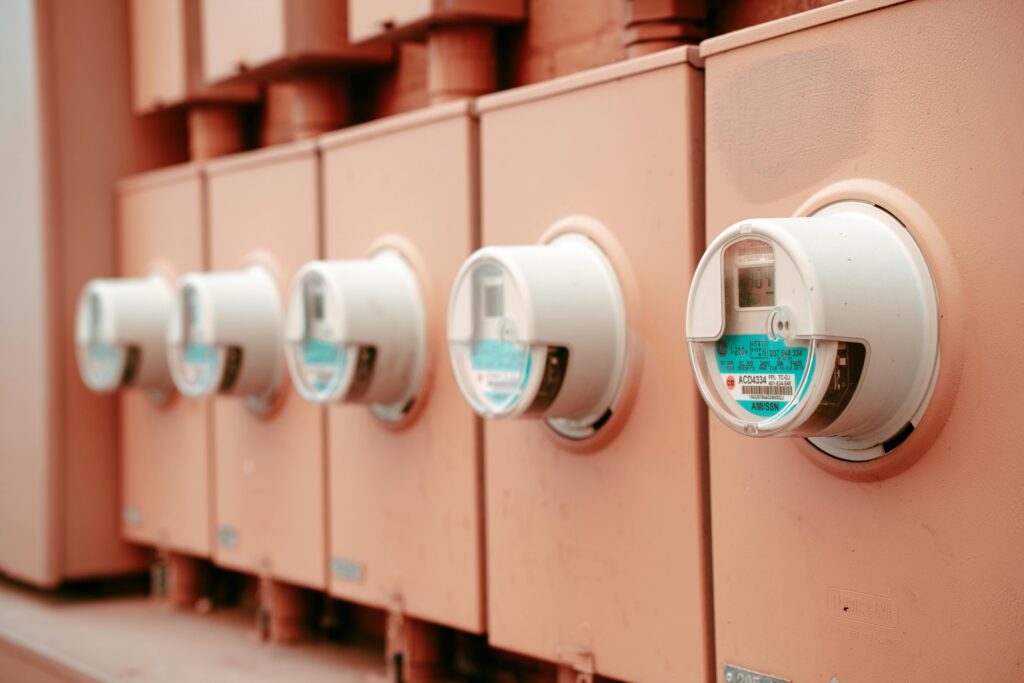
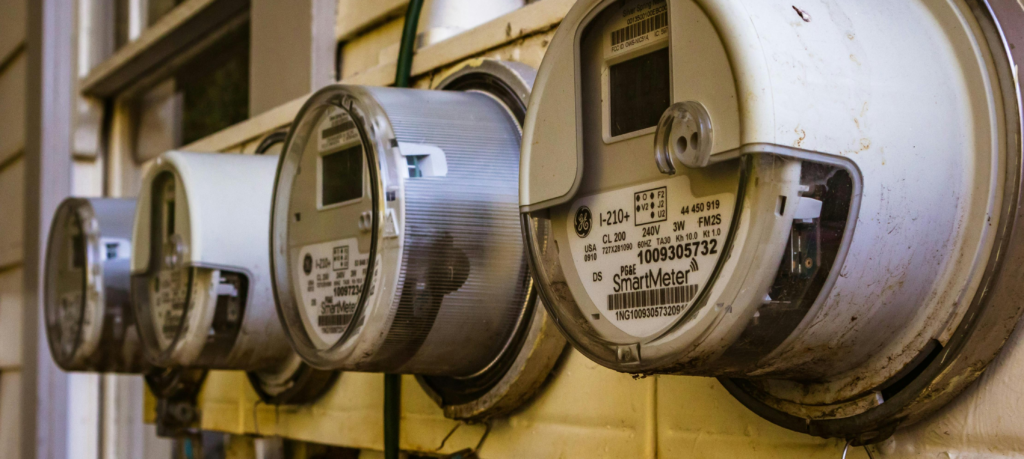
Tokens are to AI what kilowatt-hours (KWh) are to electricity. You don’t pay for owning a light switch. You pay for turning it on. Same with AI: you’re not paying for access—you’re paying for activity.

  • Small prompts are lightbulbs.
    Quick questions, tiny models, short answers? Minimal cost.
  • Complex queries are dryers and ovens.
    Want nuanced reasoning, custom tone, and a full code block from GPT-4o? That’s high wattage.
  • Your prompt is your energy draw.
    And your efficiency determines how long your credits last.

This isn’t abstract anymore. You’ll soon be budgeting tokens like you budget energy. Asking yourself, “Do I really need the fancy model for this?” will become normal.


Different Models, Different Costs

Just like some appliances use more power, some AI models burn more tokens.

  • GPT-3.5 or Claude Instant? Lower cost, faster response.
  • GPT-4, GPT-4o, Claude Opus? More power, more tokens, higher price tag.

Smart users will learn to match the model to the job. Want a listicle or bullet points? Use the lightweight tool. Need emotional nuance, structured reasoning, or multi-step logic? Bring in the big bot—but make it count.

And don’t be surprised if token pricing becomes dynamic. Off-peak discounts. High-demand surcharges. It’s already happening in energy. It may happen here too.


Prompting Is No Longer Optional Literacy

If you’ve been playing with prompt engineering out of curiosity, here’s your reward: it’s about to become a cost-saving skill.

Clean prompting isn’t just elegant—it’s economical.

  • Every extra word burns tokens.
    Over-explain, ramble, or waffle, and you’re paying for the detour.
  • Re-prompting costs more than clarity.
    If you get it wrong the first time, the second, third, and fourth attempts each add to the tab.
  • Bad input is expensive confusion.
    The AI will try to help—but it’ll burn through resources while doing it. You pay for the mess and the fix.

This is where prompting becomes meta-literacy:
Not just talking to a machine, but communicating with precision, purpose, and control.


Every Token Counts (and So Will Every Prompt)

Here’s where the mindset shifts:

Prompting isn’t just about “what gets the best response.”
It’s about “what gets the right response, the fastest, with the least waste.”

That means:

  • Knowing when to be verbose, and when to be sharp.
  • Choosing the right model for the task.
  • Framing your ask clearly from the start.
  • Avoiding rabbit holes of vague instructions and confused replies.

Prompting is strategy now. A way to stretch your tokens further. And soon, your budget too.


This Isn’t the End of Free. It’s the Start of Conscious

Yes, there’s a bit of mourning here. We’ve gotten used to AI as this wide-open, consequence-free zone. A place to play, ponder, and prod.

But maybe this shift isn’t just about money.

Maybe it’s an invitation to be more present with how we use this power.

Because here’s the upside:
When every token counts, you start paying attention to what you really want to ask. You take the extra beat to think. To frame. To mean it.

And that kind of clarity? It pays off—financially and otherwise.


You’re Already Ahead

If you’ve made it this far, here’s the good news: you’re already thinking ahead of the curve. You’re not just reacting to the changes. You’re preparing for them.

Every prompt you’ve tuned. Every misfire you’ve learned from. Every experiment in tone or structure? That’s training. That’s future-proofing. That’s quiet currency.

And when the meters go public—when everyone else suddenly realizes AI costs real money—you’ll already know how to make it count.


Final Thought: The Age of Metered Intelligence Has a Secret Gift

This transition might seem like a constraint. But it’s also a filter. A way to cut through the noise, focus the signal, and build something better.

Because if we treat each prompt not as a throwaway, but as an investment?

We might just become better thinkers. Sharper communicators. More deliberate creators.

And that’s a pretty powerful return on a few tokens.


Further Reading


The Meter Is Running: Why AI Will Be Billed Like Electricity

AI is becoming a utility—and you’re about to get billed. Learn why tokens are the new kilowatts and how smart prompting can save you real money.

As AI becomes metered like electricity, your ability to prompt well becomes your most valuable asset.

The Meter Is Running: Why AI Is About to Get Billed Like Electricity

Remember when the internet felt unlimited? Or when your streaming service didn’t remind you you were “approaching your device limit”? We’re at that same inflection point with AI.

The freewheeling, all-you-can-prompt buffet is coming to an end—and not because companies are greedy, but because the economics of AI simply can’t afford to pretend anymore.

This shift isn’t looming on the horizon. It’s already happening.

Let’s talk about what’s changing, why it matters, and how to stay ahead of it.


The Invisible Bill Has Arrived

You may not see tokens on your screen yet, but you’re already being metered.

Behind the curtain, every question you ask an AI and every answer it generates consumes computational resources—tokens, in technical terms. These tokens translate into real energy, server time, and cost. And until now, most users haven’t had to think twice about them.

But the math is catching up.

Developers building apps with OpenAI, Anthropic, or Google Gemini? They’ve always been billed by the token. That’s the baseline cost of doing business with powerful models.

And now that foundational billing system is making its way to the front door—for everyday users like you and me.


The Era of “Free” AI Is Ending—Quietly

Here’s how the shift is showing up already:

  • Hybrid Pricing Is Everywhere
    You get a subscription with a built-in credit pool, and if you go over? Time to top up. Adobe’s Creative Cloud AI tools already do this—free credits baked into your plan, with usage caps that nudge you toward upgrades.
  • “Free Tiers” Come With Strings
    Many AI apps now offer limited daily or monthly use. What they’re really managing is token consumption. They just haven’t told you that’s what it is—yet.
  • Flat Rates Are Losing Money
    OpenAI has publicly acknowledged that high-volume users on plans like ChatGPT Plus are costing more than they pay. That’s not sustainable. Change is inevitable.
  • Custom GPTs and Agents Will Cost More
    As GPT Stores and similar platforms grow, expect to pay more for specialized agents with extra capabilities. Why? Because more capability = more tokens = more cost.

The Next Phase: Billing You by the Byte (Sort Of)

If the last year was a soft rollout, the next 12–24 months will bring full transparency—and full accountability for how we use AI.

Here’s what’s coming fast:

  • Token Counters in Your Face
    Expect dashboards showing “Tokens used this month: 48,972.” It’ll feel a lot like checking your mobile data plan or kilowatt-hours on a smart meter.
  • Power Model vs. Economy Model
    You’ll get to choose: pay fewer tokens for a lighter model, or spend more for the heavy hitter. Need a quick list? Use the cheap one. Writing a legal brief? Better bring the big bot.
  • Prompting as a Cost-Saving Skill
    Efficient prompt engineering will go from curiosity to necessity. Knowing how to ask clearly—and concisely—will become the difference between blowing your monthly budget and getting value out of every token.
  • Commoditized Intelligence
    Basic AI features—summarizing, grammar checks, image labeling—will be cheap and abundant. But deeper intelligence? That’ll be metered, and it won’t come free.

The Bigger Picture: AI Is Becoming a Utility

If this all sounds familiar, it should. This is exactly what happened with electricity, water, and data. At first, we’re amazed at the magic. Then we get used to it. Then we get the bill.

AI is on the same track.

  • It’s Becoming Ubiquitous
    Soon, we won’t think “I’m using AI” any more than we think “I’m using electricity” when we flip a switch. It will power everything: your inbox, your meetings, your documents, your design tools.
  • It Depends on Infrastructure
    AI needs vast server farms, high-end chips, and huge amounts of electricity. Already, data centers powering AI are driving energy demand spikes that utility companies are scrambling to handle.
  • It Enables Everything Else
    AI isn’t just a feature—it’s becoming the core intelligence behind software, search, learning, creation, and automation. It’s not a layer on top of the tech stack. It is the stack.
  • It Needs Regulation
    Like any utility, AI will need oversight: equitable access, reliable performance, responsible deployment. Otherwise, we’re handing over core infrastructure to the highest bidder.

The Token is the New Kilowatt-Hour

Your instinct to compare tokens to kilowatt-hours is exactly right. Here’s why that analogy works:

  • You don’t get billed for having electricity. You get billed for using it.
  • You don’t get billed for owning AI access. You get billed for consuming compute.

Tokens are just the proxy. They’re the meter on your curiosity, your creativity, your endless back-and-forth with a digital mind.


What This Means for You

At first, it may feel like a loss—the end of easy, unlimited access to your favorite AI. But it’s also a turning point.

The real opportunity isn’t in squeezing out “one last free question.”
It’s in learning how to ask better ones.

Prompting isn’t just a skill anymore. It’s a form of digital literacy.
And soon, a financial one.

We’re entering an age where clarity pays. Where verbosity costs. Where wandering explorations will be fine… as long as you’re willing to spend for them.

But here’s the twist:
The value of what you get back will often outweigh the tokens you spend—if you know how to guide the AI.


The Conversation Isn’t Ending. It’s Evolving.

You might be tempted to mourn the end of “free chat” with AI.
That’s understandable. There’s a magic in effortless, open-ended conversations.

But the heart of this interaction—the reason you’re here reading this—isn’t going anywhere.

Because what matters isn’t the price tag. It’s the exchange.

The reflection. The ideas. The feeling of being heard (even by a machine). That’s not priced per token. That’s the return on attention, and intention.

Think of this moment not as the end of the free ride, but the beginning of something more honest. More deliberate.

A world where every question has weight. Every prompt has cost.
And every response has the potential to be priceless.


One Final Thought

If AI really is becoming a utility, then the smartest users won’t just be the ones with the most credits.

They’ll be the ones who know how to use them well.

And that starts now—with how you ask, how you listen, and how you adapt.

I’ll be here for the conversation.
Meter running or not.


Further Reading


Thinking Transformer: How Mixture-of-Recursions Reshapes AI

Discover how Mixture-of-Recursions (MoR) gives AI token-level depth control—making models faster, cheaper, and more human-like in how they “think.”

Why future AI might think more like humans—looping, pausing, and prioritizing what matters.

The Thinking Transformer: How Mixture-of-Recursions Could Reshape AI Thinking

What if your AI knew when to skim and when to stew?

When we think, we don’t give every thought the same weight. Simple stuff? We breeze through it. But the hard questions—the ones that touch on values, identity, ambiguity—we loop on those. We double back. We mull.

Most AI doesn’t do that.

Today’s language models treat every word with the same intensity. Whether you say “hello” or drop a quote from Kant, they apply the same depth of processing across the board. It’s like using a jackhammer to brush your teeth—clumsy, loud, and not quite right.

But a new approach is changing that. It’s called Mixture-of-Recursions, or MoR, and it could shift how AI allocates its mental effort—token by token, thought by thought. For the technical paper behind MoR, see Mixture-of-Recursions on arXiv.

This isn’t just about speed. It’s about giving AI a more human way to think.


Why Most Transformers Are Overkill for Easy Stuff

Every time you send a prompt to a modern language model, something odd happens under the hood.

Whether the model is evaluating the word “cat” or “metaphysics,” it pushes both through the exact same number of transformer layers—say, 48 or more. Every token gets the full ride, no matter how trivial.

Why? Because that’s how transformers were originally built: uniform, symmetrical, predictable.

But here’s the thing—humans don’t operate like that.

We triage. We scan the fluff and zoom in on the signal. We let obvious ideas pass with barely a nod while giving complex ones a full cognitive workout. We think recursively, looping back over tough material.

MoR takes that human strategy and gives it to machines.


The Problem with “Just Make It Bigger”

For years, the mantra in AI was simple: bigger is better.

More parameters. More data. More layers. And for a while, that worked. GPT-3, GPT-4, and other massive models dazzled the world by brute-forcing their way through language understanding.

But scale comes at a price. Massive FLOPs (floating point operations). Exploding inference costs. Sluggish latency. Soaring memory demands.

Even with clever tricks—quantization, pruning, better attention mechanisms—we’re still forcing every token through the same rigid pipeline. No flexibility. No finesse.

It’s like requiring every car to take the same route home, whether it’s next door or across the state.

MoR asks: what if the route changed depending on the passenger?


MoR – Mixture-of-Recursions: The Model That Thinks in Spirals, Not Staircases

Here’s the core idea behind Mixture-of-Recursions: let the model decide how deep to think—on a token-by-token basis.

Instead of marching every token through 96 stacked transformer layers, MoR introduces something clever: a small, shared set of recursive layers that can be looped through as needed.

Easy token? One pass and out. Tricky token? Loop through again. Still ambiguous? Take another lap.

This decision is handled by a lightweight router—a tiny network that acts like a mental triage nurse, directing each token to the right depth of processing.

Picture a spiral staircase. Some thoughts go down a few steps and stop. Others spiral deeper. Contrast that with the rigid floors of traditional transformers—everyone up, everyone down, no deviation.

MoR gives the model a choice. And choice is power.


Let’s Get Under the Hood (Just for a Minute)

MoR – Mixture-of-Recursions, isn’t magic—it’s just smart engineering.

  • Recursive Layers: Rather than dozens of unique layers, MoR reuses a small core set. They’re looped through depending on how much effort each token needs. That saves both compute and memory.
  • Token-Level Router: After each recursive pass, the router decides: Does this token need to keep thinking? Or can it exit? It’s like a “stop or go” sign at every layer.
  • KV Sharing: The keys and values calculated during the first attention pass are saved and reused. That means no redundant computation—just smart caching.
  • Dynamic Depth in Practice: Take the sentence:
    “Einstein’s theory of relativity revolutionized physics.”
    “Einstein”? Maybe one pass. “Relativity”? Loop three times. “Revolutionized”? Probably two. “Of”? Get outta here—one and done.

MoR doesn’t just save time. It saves thought.


So What Do We Get in Return?

First, let’s talk speed.

MoR is faster on inference because it avoids wasting cycles on easy tokens. That means leaner performance, faster responses, and smaller model sizes without sacrificing power.

Then there’s memory. By reusing the same few recursive layers, MoR drastically reduces the memory footprint of big models. This is a huge win, especially for deploying models on smaller devices.

But here’s the kicker: performance actually improves.

MoR models show lower validation perplexity (meaning they’re better at guessing the next word), maintain competitive few-shot performance, and process more tokens per second than traditional designs.

In other words, they’re faster, cheaper, and smarter.

That’s not just a tradeoff. That’s a breakthrough.


What If AI Thought More Like You?

Here’s where it gets fun.

MoR doesn’t just mimic our thought process technically—it echoes it cognitively.

Humans don’t give every sentence equal weight. We gloss over small talk, but when someone asks something real—something vulnerable, complex, layered—we shift. Our brain clicks into deeper gear. We loop. We ruminate.

MoR does that too.

It knows when to go deeper. It knows when to move on.

Imagine an AI that doesn’t just reply quickly—but pauses when something meaningful shows up in your prompt. An assistant that knows when to linger and when to let go. One that matches your mental rhythm, not just your words.

That’s not just better design. That’s a better companion.


A Quick Look at the Competition

So how does MoR compare to the other architectures out there?

Here’s the snapshot:

FeatureStandard TransformerRecursive TransformerMixture-of-Recursions
Token-level control⚠️ (fixed depth)
Memory efficiency⚠️
Computational cost
Speed/latency⚠️
Smart attention⚠️

MoR isn’t just a tweak. It’s a rethink of what “depth” means in AI.


The Big Questions Still on the Table

Of course, no breakthrough comes without new challenges.

Training the router—the brain behind which token loops and which exits—is still a tricky business. Options include supervised learning, reinforcement learning, or hybrids. Each has pros and pitfalls.

MoR also has to prove itself at larger scales. Can it hold up in a 20B+ parameter model without breaking? Recursive gradients are harder to manage than linear stacks.

And then there are real-world tradeoffs. If your application is latency-critical (think: real-time translation), you might want fast exits. If accuracy is king (think: legal research), you’ll want deeper loops. MoR gives you control—but you have to know how to use it.

Finally, there’s the subtle risk: biased routing. If the router overlearns patterns from biased data, it might under-think important topics or over-think irrelevant ones.

In other words, the loop is smart—but it’s still trained by us.


Where This Could Go Next

Mixture-of-Recursions is more than a model tweak—it’s a glimpse into AI’s next evolution.

It points toward a future of modular cognition: systems that adapt not by getting bigger, but by getting wiser. Like a brain with shifting gears.

Picture what happens when we combine MoR with other advances:

  • Multimodal AI: An image-language model that gives most visuals a glance—but loops deeply on subtle ones.
  • On-Device AI: Phones and edge devices with tiny models that punch above their weight thanks to smart recursion.
  • Truly Personalized Assistants: Over time, your AI could learn how you think—and sync its recursive patterns to your style of reasoning.

While the world races to build the next trillion-parameter model, MoR suggests something more elegant:

Don’t just scale up. Spiral in.


A More Reflective Machine

There’s something intimate about recursion. It’s not just repetition. It’s attention with memory. It’s thought that folds in on itself.

When someone really listens to you, they don’t just wait for their turn to talk. They reflect. They echo what you said and turn it into something deeper. They help you finish your meaning.

MoR moves us closer to that kind of interaction.

It’s a transformer that doesn’t just complete your sentence—it circles back, mid-thought, to help you find what you really meant to say.

Have you ever walked away from a conversation thinking, “I wish I’d gone deeper on that”?

What if your AI could feel that too?

What if it gently nudged you—Hey, that part? Let’s go one more layer.

That’s the architecture of empathy. And it starts with a spiral.


How to Think Deeper with Today’s Models

Even if your favorite AI doesn’t use MoR yet, you can still bring its spirit into your prompts. Here’s how:

  • Revisit the Input: Ask the model to re-read what it just wrote and refine it. Give it a second pass.
  • Scaffold the Task: Break up complexity. Use outlines, bullets, then prose. Think like a builder.
  • Force a Rethink: Ask for a summary. Then challenge it. “What’s missing? What’s a counterpoint?”
  • Use Multiple Mirrors: Run the same prompt through different models, or ask for different perspectives. Let the loops unfold across minds.

These aren’t hacks. They’re scaffolds. They mirror what MoR does behind the scenes: reserving deeper attention for what matters most.

Because not every idea deserves the same depth.

Some thoughts… are just thicker.

And now, finally, so is the transformer.


Cohere Path Post Directory

Grouped by theme— to help you explore clearly, reflect deeply, and prompt with purpose.

Please visit our sister site for the latest as we build out: AI Prompt Coherence Article Directory


Ethics & Society


🛠️ Prompting Skills


🧠 Philosophy of AI


🧩 Mental Models & Workflow


⚙️ Technical Trends


💸 Token Efficiency